Energy Efficiency and Sustainability in Digital Signage
Discover strategies to reduce energy consumption and environmental impact of digital signage deployments with TelemetryOS power management features.
Digital signage networks consume significant energy across displays operating continuously. Learn strategies to reduce environmental impact and operational costs with TelemetryOS power management features.
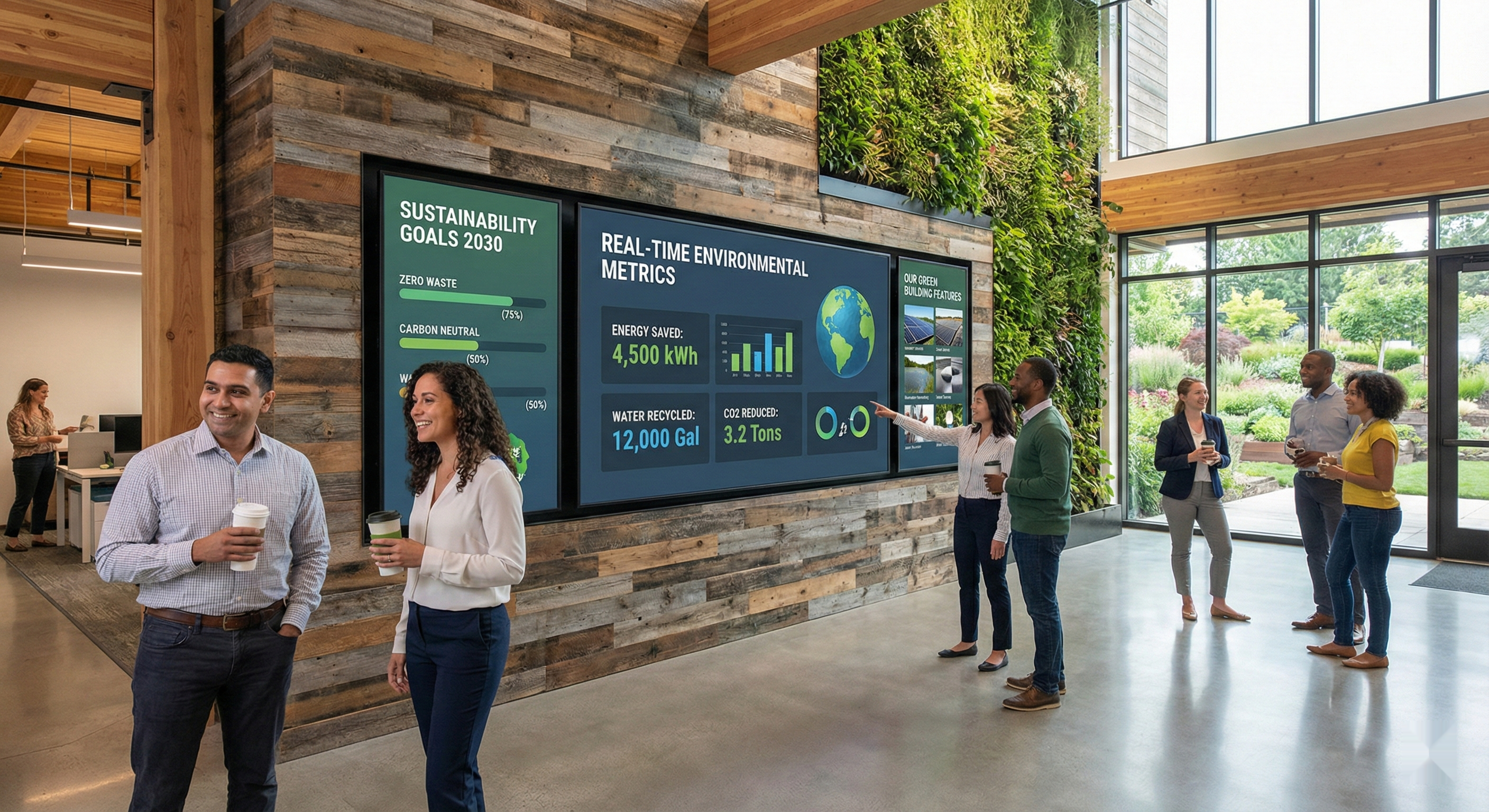
Energy Efficiency and Sustainability in Digital Signage Networks
A 1,000-display digital signage network consumes 300,000-400,000 kWh annually, equivalent to the energy required to power 30-40 average homes. For organizations managing large-scale deployments, that energy consumption translates directly to operational costs and environmental impact. The challenge goes beyond displays themselves to include network infrastructure, supporting systems, and the embedded carbon from manufacturing and logistics. As corporate sustainability reporting increasingly captures technology infrastructure energy usage, digital signage efficiency becomes a measurable factor in meeting environmental commitments and stakeholder expectations.
Energy-saving strategies address multiple lifecycle stages: procurement decisions that prioritize efficient hardware, operational practices that minimize unnecessary consumption, and disposal processes that handle e-waste responsibly. Modern LED display technology consumes 30-50% less energy than equivalent LCD displays from previous generations, while OLED technology offers further efficiency gains in applications requiring deep blacks and high contrast ratios. These hardware improvements provide the foundation, but operational strategies determine whether that efficiency potential translates into actual energy savings across deployments.
Environmental Impact Across the Lifecycle
Digital signage environmental costs begin before displays ever reach facilities. Manufacturing processes require significant energy and raw materials, creating embedded carbon before equipment ships. A commercial display's environmental footprint includes component sourcing, assembly energy, and transportation logistics that collectively represent a substantial portion of total lifecycle impact. This manufacturing phase is why equipment longevity matters so much: extending operational life amortizes initial environmental costs across more years of service.
Once deployed, displays operate continuously in many environments, consuming 150-400 watts depending on size, technology, and brightness settings. That continuous draw accumulates into substantial energy costs over months and years of operation. Network infrastructure supporting those displays (servers, networking equipment, cooling systems) adds consumption that scales with deployment size. For a large retail chain running displays across hundreds of locations, these combined electrical loads represent both a significant cost center and a real opportunity for efficiency improvements.
End-of-life disposal creates the final environmental challenge. Electronic components contain materials requiring specialized handling to prevent environmental contamination and recover valuable resources. E-waste considerations drive sustainable procurement strategies that evaluate not just operational efficiency but disposal pathways and recycling options. Organizations committed to circular economy principles assess whether displays can be refurbished or repurposed rather than discarded when primary use cases end.
Power Management Technologies That Reduce Consumption
Automatic brightness adjustment reduces energy consumption by 20-40% compared to fixed brightness operation by optimizing display output based on ambient lighting conditions. Displays operating in dim environments don't need the same brightness levels as those in spaces with significant natural light. Ambient light sensors measure environmental conditions and adjust display output continuously, creating dynamic efficiency that responds to changing conditions throughout the day.
Motion sensors enable displays to activate only when viewers are present, eliminating energy waste during periods when screens serve no audience. Proximity detection triggers display wake-up as people approach, ensuring content appears when needed while displays remain dark during periods of no traffic. In environments with intermittent foot traffic like hallways, elevator lobbies, and break rooms, this presence-based activation can reduce total energy consumption by 50% or more compared to continuous operation.
Scheduled power management turns displays off during periods when they're not needed: overnight hours, weekends, holidays, or during facility maintenance. Intelligent scheduling considers occupancy patterns and operational requirements to maximize energy savings without compromising information availability when audiences are actually present. A corporate office lobby display might operate 6am-7pm weekdays but remain dark during nights and weekends. A retail display might follow store hours precisely. Multiplied across hundreds or thousands of displays, these scheduled shutdowns create substantial energy savings.
Content optimization reduces processing power requirements through efficient video encoding, optimized image formats, and simplified graphics that need less computational resources to render. Dark mode interfaces can reduce energy consumption on OLED displays where black pixels consume no power. Variable refresh rate technology adjusts screen update frequency based on content requirements: static content doesn't need the same rapid refresh as video, and reducing unnecessary screen updates lowers processing power accordingly.
TelemetryOS Platform Power Management
TelemetryOS enables organizations to implement energy-efficient signage operations through several platform capabilities. The Device Active Window feature allows administrators to define allowed hours for playback per day, ensuring displays operate only during designated periods rather than running continuously. A corporate lobby display can be configured to power down after business hours, while a retail display follows store operating schedules.
For display hardware control, TelemetryOS supports RS-232 serial commands and HDMI-CEC protocols that can trigger power events directly on connected displays. This enables automated power-on and power-off sequences coordinated with content schedules, allowing the platform to control display hardware states rather than simply stopping content playback while screens remain powered.
Fleet management capabilities in TelemetryOS Studio enable administrators to organize devices into groups by location or function, applying power schedules at scale rather than configuring individual devices. Real-time device health monitoring shows CPU utilization, cache status, and operational logs, helping identify devices consuming more resources than expected or operating outside normal parameters.
Content scheduling features allow rule-based content targeting by time and place, which organizations can use to coordinate content delivery with occupancy patterns. Rather than pushing content to displays regardless of whether anyone will see it, scheduled delivery ensures displays activate with fresh content precisely when audiences arrive.
Tradeoffs in Energy-Efficient Signage
Energy efficiency strategies involve genuine tradeoffs that organizations should evaluate against their specific requirements.
Aggressive power schedules reduce consumption but create windows where displays show nothing. Emergency messaging systems may need exceptions to shutdown schedules, and unexpected communication needs can arise during hours when screens are dark. The savings are real, but so is the operational cost of unavailability.
Presence detection saves significant energy in low-traffic areas but can create awkward delays as displays wake up. A visitor approaching a blank reception screen that takes several seconds to activate gets a worse first impression than one greeted by an already-lit display. In hallways and break rooms, the tradeoff favors motion activation. In reception areas and lobbies, it often doesn't.
RS-232 and CEC commands enable true display power control, but implementation varies across manufacturers. Some displays respond reliably; others have quirks with cold-start timing or input switching after power cycles. The efficiency gain comes with increased complexity in display selection and testing that IT teams should plan for.
Automatic brightness adjustment saves energy but can reduce visibility in challenging lighting conditions. Retail displays competing with bright storefronts may need higher brightness settings that consume more power. Healthcare environments may prioritize absolute readability over energy optimization. The right balance depends on where the display sits, not a blanket policy applied across all locations.
Content optimization presents its own tension. Efficient video encoding and simplified graphics reduce processing load but constrain creative options. Marketing teams may resist restrictions that limit animation, video quality, or visual complexity. And the upfront investment in energy-efficient hardware, ambient light sensors, and motion detection costs more initially. ROI calculations depend on energy prices, operational hours, and deployment scale. Smaller deployments may not recoup efficiency investments within reasonable timeframes.
Implementation Strategies for Sustainable Signage
Lifecycle planning considers total environmental impact from procurement through disposal, enabling decisions that minimize overall environmental cost rather than just operational energy consumption. A display with higher initial efficiency but shorter operational life may have worse total environmental impact than a more durable alternative with slightly lower efficiency ratings. Evaluating total cost of ownership, including energy consumption over expected operational life, maintenance requirements, and disposal costs, reveals the most sustainable choice.
Sustainable procurement policies establish criteria for equipment selection that prioritize energy efficiency certifications like Energy Star, environmental standards like EPEAT ratings, and responsible manufacturing practices. These policies build sustainability into technology decisions from the start rather than retrofitting after procurement. Making environmental performance a procurement requirement alongside technical specifications and cost ensures supply chain decisions support sustainability commitments.
Employee education and engagement create cultural support for energy efficiency initiatives. Training programs help staff understand energy efficiency goals and their role in achieving them: why displays power down overnight, why brightness levels adjust automatically, and how content choices affect energy consumption. When the organization communicates the business and environmental case for energy efficiency, staff become active participants rather than puzzled observers of power management changes.
Vendor partnerships with environmentally responsible manufacturers ensure procurement decisions support companies with strong sustainability commitments. Supplier sustainability assessment evaluates manufacturing practices, supply chain environmental performance, and corporate environmental policies. These partnerships signal market demand for sustainable technology and encourage vendors to prioritize environmental performance in product development.
Quantifying Environmental Benefits
Carbon footprint tracking calculates environmental impact based on actual energy consumption and regional electricity grid carbon intensity. A kilowatt-hour consumed in a region powered primarily by coal has different carbon impact than the same consumption in a region with significant renewable energy generation. Connecting energy consumption data with grid carbon intensity for each deployment location lets organizations calculate accurate carbon footprint figures that support sustainability reporting and track progress toward emission reduction goals.
Renewable energy integration reduces carbon footprint by powering digital signage networks with clean energy sources. Organizations with on-site solar generation, wind power, or renewable energy purchasing agreements can offset electricity consumption from displays with clean energy. In these scenarios, operational energy consumption still matters for cost and resource efficiency, but the carbon impact approaches zero when renewable sources provide the electricity.
Energy efficiency benchmarking establishes performance standards and tracks improvement over time. Industry benchmarks provide targets (average watts per square foot of display area, energy consumption per screen per year) that let organizations assess their performance relative to peers. Internal benchmarking over time reveals whether efficiency initiatives are delivering measurable results. Without quantified benchmarks and tracking, energy efficiency remains aspirational rather than operational.
Beyond Optimization: The Larger Questions
The strategies outlined here can meaningfully reduce energy consumption in digital signage networks, often by 30-50% compared to unmanaged deployments. Yet the deeper question remains: which displays genuinely need to exist, and which are running simply because they can?
Every display added to a network consumes resources regardless of how efficiently it operates. Organizations serious about sustainability might examine not just how to run displays more efficiently, but whether each display in their network serves a purpose that justifies its environmental cost. A single display eliminated has greater environmental impact than optimizing ten displays that continue operating.
This scrutiny extends to content strategy. Displays running generic content to fill airtime consume the same energy as displays delivering targeted, valuable information. The environmental case for digital signage ultimately rests on whether the communication value justifies the resource consumption, a question efficiency measures alone cannot answer.
See TelemetryOS in Action
Explore how leading companies transform their screens