Corporate Communications in Hybrid Workplaces
How TelemetryOS enables effective corporate communication in hybrid work environments through digital signage and unified content distribution.
When your workforce spans office spaces and flexible schedules, traditional communication methods fall short. TelemetryOS enables connected experiences that keep everyone informed regardless of where they work.
Corporate Communications in Hybrid Workplaces
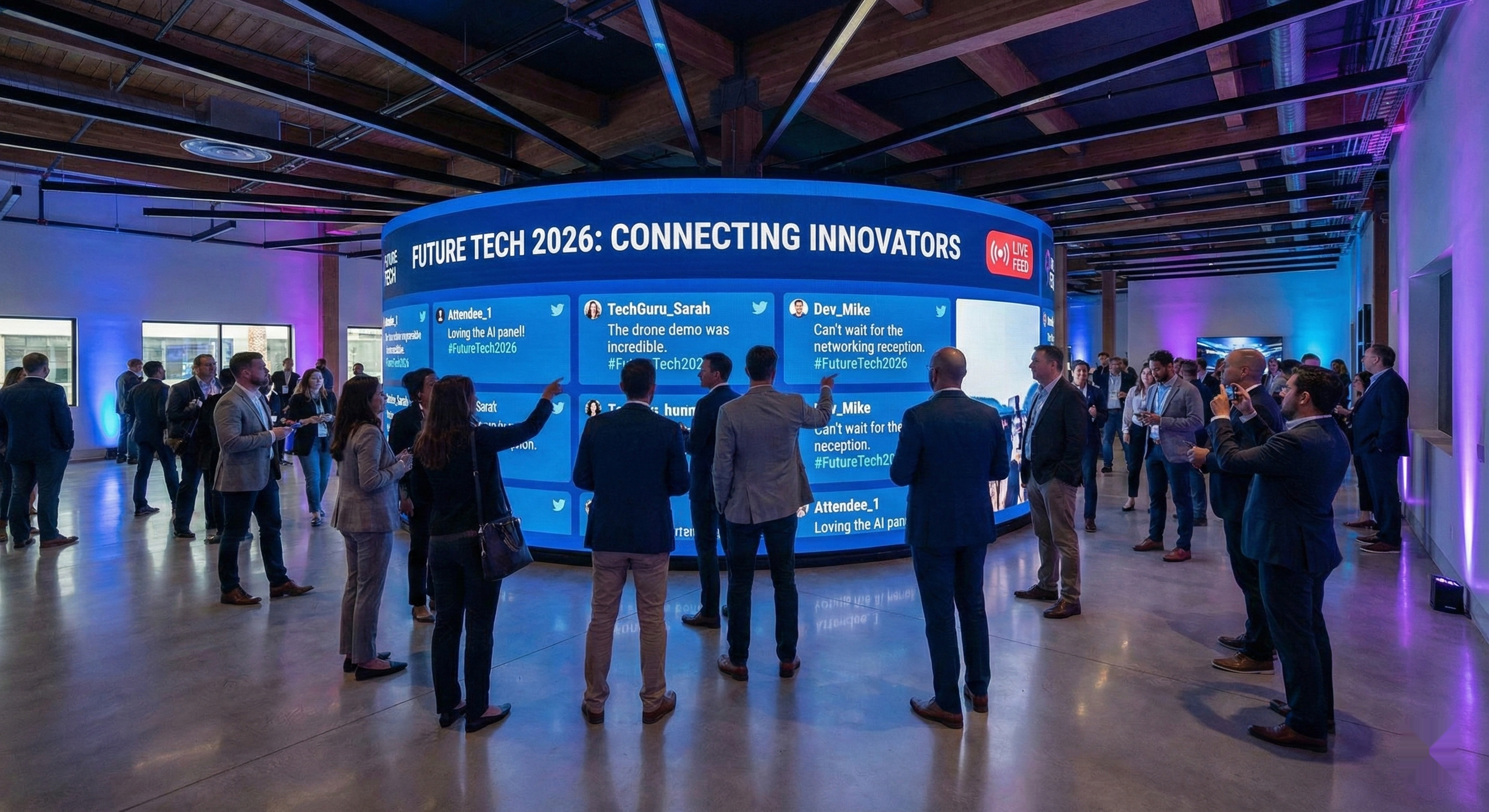
A corporate communications team managing 800 employees across four office locations faces a familiar distribution problem: email gets buried, Slack channels multiply, and employees in different offices receive information at different times. The facilities director opens the scheduling interface at 7am, schedules a company-wide town hall announcement across all office displays simultaneously, and confirms deployment before employees arrive. By 8:30am, every employee walking past a lobby display, break room screen, or conference room sees identical messaging about the restructuring announcement. Traditional email would have taken hours to draft, gotten lost in inboxes, and left some offices hearing about changes informally before official communication arrived.
This synchronization challenge appears in every organization attempting multi-location operations. When communication channels fragment by location and department, critical information reaches different groups at different times through different formats. A benefits enrollment deadline posted only in headquarters leaves other offices unaware until hours later. A safety protocol update sent via one channel while being displayed on screens in another creates confusion about which version is authoritative.
The Information Distribution Challenge
Hybrid organizations discover that communication effectiveness breaks down at scale. A 200-person company using email and a few Slack channels maintains reasonable alignment, but at 1,000 employees across multiple locations with varied schedules, information silos emerge despite best intentions. The HR team sends a policy update via email Tuesday morning. Some employees see it immediately. Others check email Wednesday. Field staff without regular computer access learn about it Friday. By the time everyone receives the information, the organization has already operated under inconsistent understanding for three days.
Time zones compound these distribution problems. A West Coast headquarters announces a product launch at 9am Pacific, pushing content to office displays and sending email simultaneously. East Coast employees see the display announcement at lunch, well after morning meetings where the absence of information created confusion. Physical displays provide a different dynamic than email: employees don't have to actively seek information. A message on the lobby display reaches everyone entering the building, while email sits unopened in inboxes.
Cultural fragmentation emerges when physical office spaces develop their own information ecosystems separate from each other. The engineering VP mentions a strategic shift during a casual lobby conversation at headquarters, and those employees discuss it over lunch while other office teammates remain unaware until the formal email arrives three days later. Digital displays distributed across all locations can broadcast these updates more broadly, creating a shared information environment that physical presence alone cannot provide.
Digital Displays as Communication Infrastructure
Physical displays provide ambient information awareness that doesn't require active seeking. Email demands that employees open messages, Slack requires channel monitoring, and intranets need deliberate navigation. A display in a common area delivers information to anyone passing by, creating passive exposure to company news and department updates. An employee walking to the cafeteria sees a three-second highlight of quarterly results, a rotating message about the upcoming benefits deadline, and a recognition slide for the sales team's achievement. This ambient exposure reinforces formal communications without requiring additional employee effort.
Strategic placement determines effectiveness. A display in the main entrance reaches everyone entering the building but competes with the transition from outside to inside. Break room displays capture relaxed attention during natural pauses. Elevator lobby displays benefit from captive audiences during short wait periods. Conference room displays reach meeting attendees during arrival and setup. Each location serves different information types based on viewing context. TelemetryOS enables building applications that deliver location-appropriate content: quick headlines for high-traffic areas, detailed information for break rooms, meeting agendas for conference spaces.
Visual communication cuts through information overload more effectively than text-heavy channels. An employee who ignores email subject lines still notices a large display showing company performance metrics. When the workplace safety team needs to communicate an updated evacuation procedure, a 30-second animated diagram on lobby displays reaches more employees faster than a 500-word email that most will skim.
What Communication Infrastructure Requires
The gap between email-based communication and proper display infrastructure comes down to three capabilities: integration with existing systems, scheduling that respects organizational complexity, and permissions that match how decisions actually get made.
Integration matters because manual content creation doesn't scale. When the HR system records a new hire, that information should flow automatically to welcome displays. When the facilities team updates a room booking system, conference room displays should refresh without someone re-entering data. TelemetryOS enables building these integrations using standard web technologies (React, Vue, JavaScript) connected to any system with an API, so communication teams build what they need rather than adapting to rigid templates. The automation keeps display content current while eliminating duplicate content management.
Scheduling gets complicated fast. A diversity awareness campaign running for two weeks across all office displays sounds straightforward until you realize different locations observe different holidays during that period. Multi-timezone, location-specific scheduling needs to happen systematically through a management platform rather than through manual intervention for each exception.
Permissions need to reflect how organizations actually work. The facilities team updates building maintenance notices without approval. HR policy changes require legal review before publication. The executive communications specialist pushes urgent messages to all locations immediately. Individual managers need department head approval for team-specific content. Role-based access control that mirrors existing organizational hierarchies prevents both bottlenecks and unauthorized publishing.
How This Plays Out in Practice
A product launch at a technology company illustrates the coordination problem well. The product team releases a new feature, and that information needs to reach engineering, sales, and support simultaneously, but each group needs different content. Engineering cares about technical implementation details, while sales needs positioning they can use in customer calls that afternoon. With display infrastructure, each department's screens show the relevant version at the same time, rather than relying on a cascade of emails and meetings that invariably leaves someone underprepared.
Healthcare shows the shift-work dimension. A multi-hospital system communicating an updated medication protocol to nursing staff working day, night, and weekend shifts across five locations can't rely on email or a staff meeting. The update appears on nursing station displays across all locations at once. Night shift nurses arriving at 7pm see the same information that day shift received at 7am, without anyone needing to hand off a memo or remember to forward a message.
The Tradeoffs
Physical displays solve some problems while creating others. A display requires someone to be physically present to see it, which limits reach compared to email that follows employees everywhere. Organizations that deploy displays without considering these limitations end up with expensive screens showing content that doesn't reach the employees who need it most.
Content management also requires ongoing attention. Unlike a one-time email, displays run continuously. Stale content undermines credibility faster than no content at all. A "Welcome New Employees" message showing names from six months ago signals that nobody is paying attention. Organizations need to assign ownership and establish content freshness standards before deployment, not after.
The investment makes sense for organizations with significant physical presence: multiple offices, shared workspaces, high-traffic common areas. For fully remote organizations or those with minimal shared physical space, display infrastructure provides limited value. The cost-benefit calculation shifts depending on how many employees regularly encounter physical spaces where displays can reach them.
Building Connected Organizations
Hybrid work succeeds when information distribution becomes infrastructure rather than a manual process requiring constant intervention. TelemetryOS enables building communication systems where organizational information flows automatically to appropriate audiences through physical displays integrated with existing collaboration tools, eliminating the communication delays and information gaps that fragment multi-location organizations.
The organizations most successful with hybrid communication treat physical and digital channels as complementary systems. Communications, IT infrastructure, and facilities teams collaborate on implementations where content management, technical operations, and physical installation support a single communication strategy. That organizational alignment proves as important as the technology itself.
Yet significant questions remain unresolved. How do organizations measure whether ambient communication actually improves alignment, or simply adds another channel employees learn to ignore? What happens when the hybrid workforce becomes majority remote, and physical displays reach a shrinking percentage of employees? The tools for distributing information have matured faster than the frameworks for understanding whether that distribution creates genuine organizational coherence. The next generation of workplace communication will need to address not just how to reach employees, but how to know whether reaching them actually changed anything.
See TelemetryOS in Action
Explore how leading companies transform their screens